

Liquid Supplement Supplier Audits: Review Sites, Documents and Product Controls
Review the company, production site and product records as separate questions. A management certificate, an audit report and a batch test report establish different things. Start by identifying which company and site will mix, fill, label and release the product you intend to buy.
1. Map the work and the responsible site
Record the legal entity, site address, proposed operations and subcontracted work. Ask who owns the formula, which company buys packaging, where filling takes place and who approves the finished-batch disposition. Keep those responsibilities in the purchasing and quality agreements.
2. Check what each document actually covers
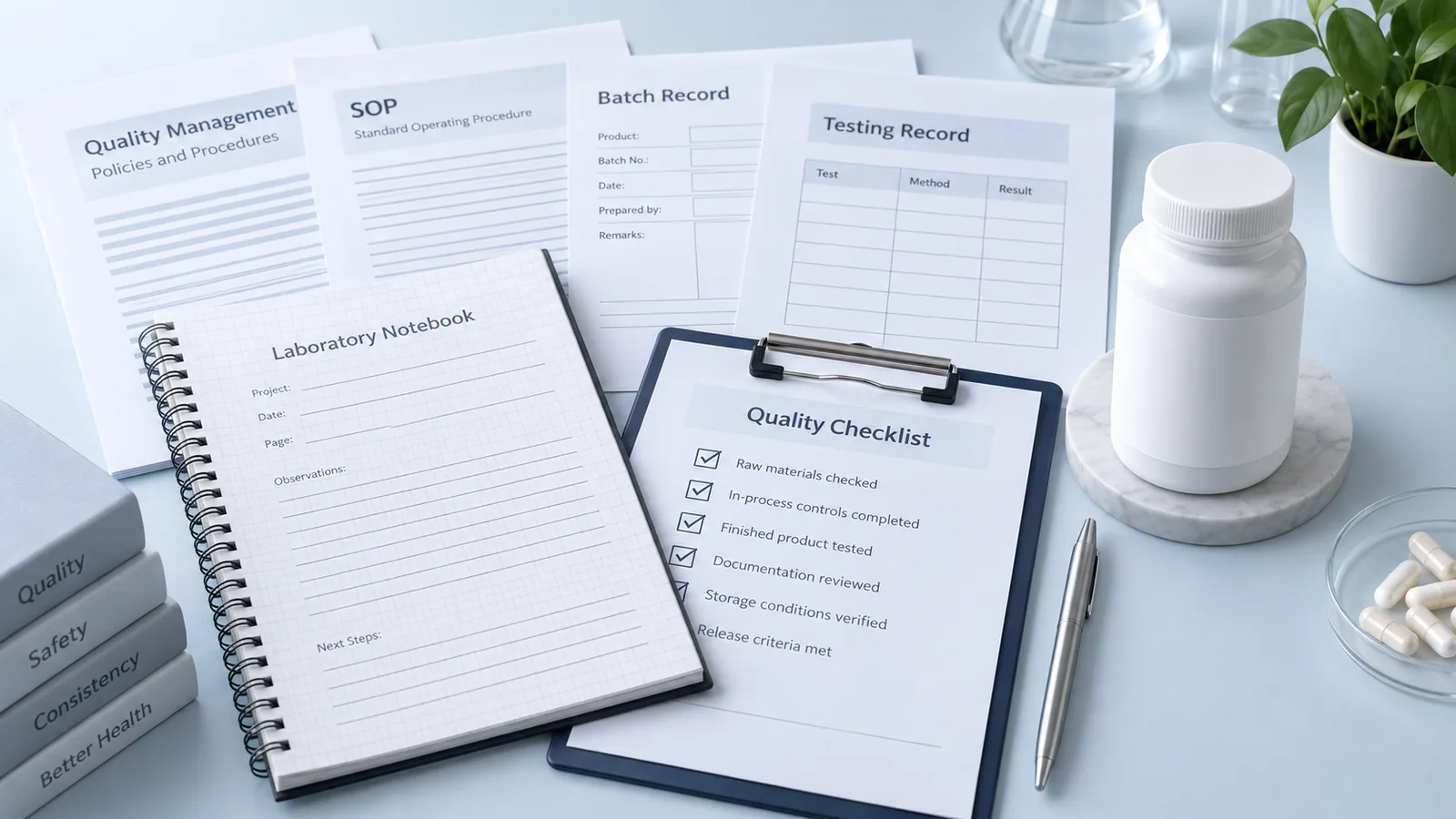
| Document | Verify | What it does not establish alone |
|---|---|---|
| Site or management-system certificate | Issuer, legal entity, site, activities, issue and expiry details | That the proposed finished formula has passed its tests |
| Audit report | Site, operations reviewed, date, findings and closure records | That every product and outsourced operation was assessed |
| Product specification | Formula or product identity, revision, methods and acceptance criteria | A measured result for a particular batch |
| Batch or sample report | Sample identity, methods, dates, results and responsible issuer | Shelf life for a different formula or container |
| Packaging specification | Bottle, closure, dispenser and artwork revisions | Compatibility without relevant evaluation |
3. Follow the controls for the proposed formula
Ask how ingredients and packaging are identified and traced, how water is controlled where used, how mixing and filling equipment are cleaned, and how deviations and substitutions are handled. Distinguish a water-based formula from an oil-based one when discussing the process.
For US dietary supplement projects, FDA’s CGMP guide provides a reference for discussing specifications and quality records. It is not a certificate issued to this supplier.
Ask the technical team to explain the proposed microbiological and preservation assessment for the actual formula, pack and use pattern. A preservative-free preference does not itself answer those questions. Avoid accepting a generic pass statement without the applicable method, sample and criterion.
4. Close findings with identified evidence
| Finding | Responsible party | Evidence needed | Decision |
|---|---|---|---|
| Example: site scope not identified | Assign in the quality review | Named site and operations in the proposal | Open until supplied |
| Example: sample and report revisions differ | Assign in the technical review | Reconciled specification and report references | Clarify or repeat the relevant work |
The rows above are examples of how to record a gap, not findings against this company. Keep the actual review dated and identify what evidence closes each item. Do not convert an audit score into an automatic product approval.
Continue the product decision
Discuss this liquid project with the enquiry team — add your formula or product reference, market, pack and quantity.
Latest Popular Articles

Contact


