
Supplement Packaging and Labeling: A Buyer’s Checklist
Treat packaging protection, label information and the approval of claims as connected but separate tasks.
Prepare an artwork-to-specification check
| Approval check | Compare in the same revision | Resolve before printing |
|---|---|---|
| Formula identity | Product reference, named ingredients and their amount basis. | The specification and artwork must describe the same formula and format. |
| Serving and pack count | Amount per unit, units per serving and servings per retail pack. | Check the calculation and units; a bottle volume alone is not a serving. |
| Carrier, base and other ingredients | The complete formula, including the proposed carrier, sweetening or gelling ingredients where relevant. | Keep ingredient and dietary statements consistent with the actual composition. |
| Allergens and restrictions | Ingredient sources, proposed warnings and destination-market requirements. | Assign the review; an example label is not evidence of an allergen-free or vegan product. |
| Numbers and units | Ingredient amounts, nutrient figures, weight or volume units and serving basis. | Resolve contradictory values in the source file; do not silently guess a correction. |
| Components and claims | Container, closure, code area, proposed statements and supporting records. | Confirm component revisions and review the evidence for each proposed claim. |
| Approval record | Named decision owner, date and authorised artwork revision. | Keep drafts separate from the print-approved file. |
Hand over the component and artwork together
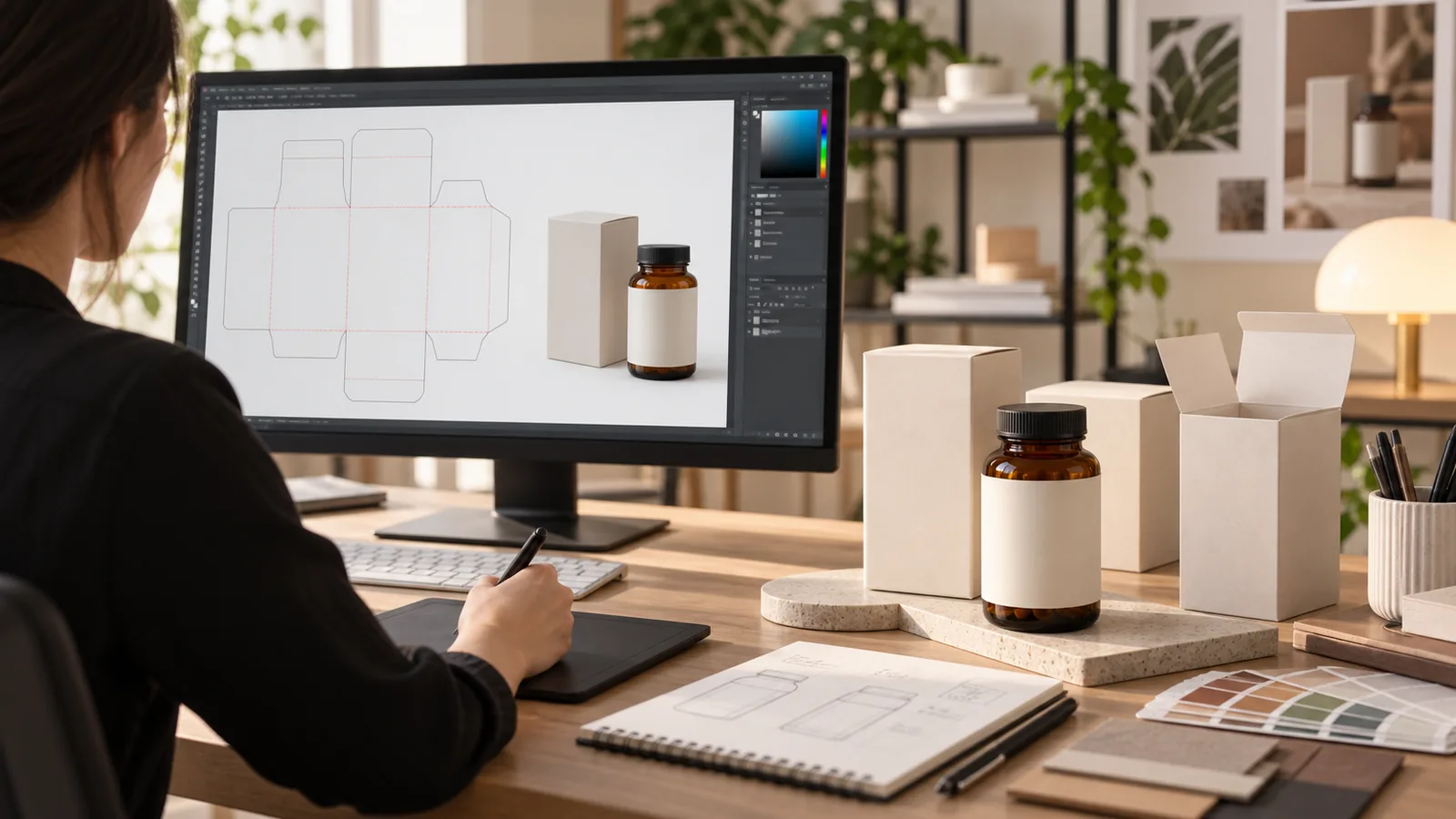
The supplied production templates separate label responsibility, material and finish from the product formula. Use that distinction to prepare one artwork handover for the selected pack.
| Handover item | Put in the review file | Decision before printing |
|---|---|---|
| Bottle and printable panel | The selected bottle/closure assembly, usable panel and final label drawing. Printable panel measurements and label artwork dimensions need separate confirmation. | Confirm the component, dimension orientation and print-approved revision. For a stick pack, also check the unfolded drawing and seal areas. See the finished-pack and print-layout examples. |
| Label material and finish | Requested material and finish, plus any specific use conditions. | Discuss the proposed option and required assessment with the supplier; a finish name alone is not a durability result. |
| Design and print responsibility | Who prepares the file, who checks market text and who approves the print proof. | Name the approval owner and keep the approved revision. |
| Product and pack information | The formula/serving reference, pack count or fill volume, barcode and date/code area. | Reconcile the artwork with the product and component specification. |
| Later changes | What changed in the formula, bottle, label or retail box. | Confirm whether the file, component proposal or sample approval needs revision. |
The supplied template lists PP, silver-finish and synthetic-paper label materials, and gloss, matte, UV and foil-effect finishes as discussion items. Ask which combination is proposed for your pack and whether setup, printing and surplus stock are included. Performance and availability are confirmed for the actual material.
Source: supplied order-production template dated 20 January 2026, label material/finish and design-responsibility fields. Existing branded examples and internal coding images are not reproduced here.
Check the drawing before approving the label
Illustrative purchasing exercise, not a customer case, test result or quotation.
The project’s supplied packaging records include bottle references at 30 mL, 60 mL and 120 mL. Those fill-volume names do not establish the printable label dimensions for a selected bottle and closure.
- Component decision: Identify the actual bottle, closure and drawing revision.
- Artwork decision: Reconcile the label panel, language and content against that drawing.
- Approval decision: Keep the accepted proof and component reference with the order.
Decision output: The liquid manufacturing page shows the source bottle-measurement photographs. Use them to understand what to identify, then request the drawing for the assembly being quoted; do not scale an old label solely by volume.
FDA separates nutrition labelling from ingredient labelling in its US guide. Use the applicable guidance for each field rather than treating a label review as a spelling check. For another market, identify its own requirements. A bottle count calculation does not establish a personal dose, and a package illustration does not prove stability or compliance.
Use the relevant project route
Latest Popular Articles

Contact


