

Reviewing Serving Information for Vitamin Softgels: A Brand Workflow
It does not select personal vitamin doses. The simple pack arithmetic below is an illustration, not a recommended serving for any person.
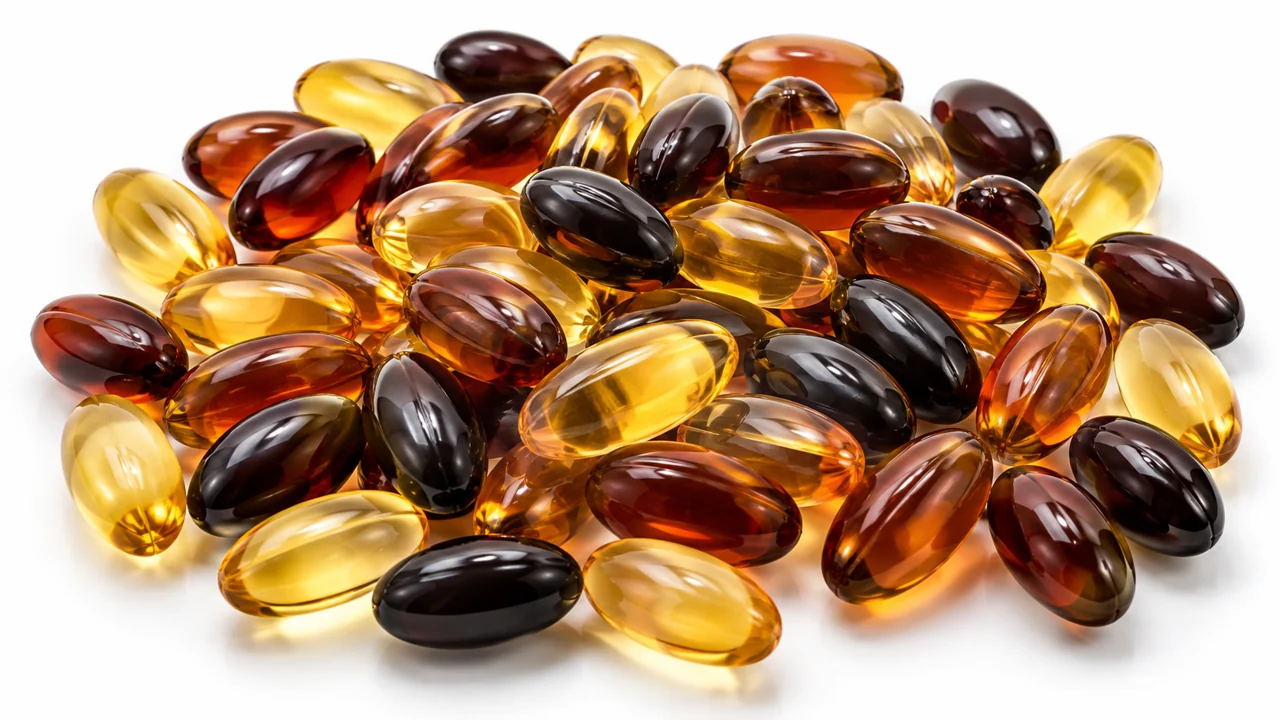
A vitamin softgel label should not begin with the question, “How many capsules should a person take?” It should begin with a formula whose amount per serving, intended population, conditions of use, and warnings have already received appropriate scientific, safety, and regulatory review. The brand’s next task is operational: translate that reviewed composition into an accurate number of units per serving, consistent label language, appropriate warnings, and a package that matches the approved presentation.
This workflow is for product teams and does not provide personal vitamin doses, age-based recommendations, medical advice, or a determination that a product is suitable for any individual.
1. Freeze the Reviewed Formula and Its Basis
Create a controlled formula record before calculating the number of softgels. For every dietary ingredient, record the reviewed amount per serving, the chemical or nutrient form, the basis on which the amount is declared, the raw-material assay or concentration, and any justified adjustment used in the manufacturing formula. Include carriers and other fill components because they affect fill mass and capsule size even when they are not declared as dietary ingredients.
Do not copy amounts from a competitor, infer them from capsule size, or combine guidance from unrelated products. If the intended population, market, ingredient source, nutrient form, or amount changes, route the composition back through the appropriate review rather than silently changing the label calculation.
Build a Formula-to-Label Control Table
| Controlled field | Question to resolve | Source of truth |
|---|---|---|
| Reviewed amount | What amount is intended for one complete serving? | Approved formula and professional review record |
| Ingredient form | Which vitamin form or source supplies the declared nutrient? | Raw-material specification and formula |
| Assay basis | Is the calculation based on the nutrient, compound, potency, or another defined basis? | Specification, test method, and market rules |
| Amount per unit | How much of the reviewed amount is delivered by one representative softgel? | Master formula and verified fill calculation |
| Units per serving | How many whole softgels deliver the complete reviewed serving? | Approved serving calculation |
| Label declaration | Which name, unit, rounding rule, and daily-value presentation apply? | Destination-market regulatory review |
2. Convert the Reviewed Serving into an Amount per Softgel
Start with a mass balance for the complete serving. Convert each reviewed nutrient target into the required quantity of its raw material using the current specification and assay basis. Add the other fill components, then estimate or measure fill density using representative material. This provides a proposed fill mass and volume for the complete serving.
Next, compare the complete serving with practical softgel sizes. If it will not fit in one acceptable unit, divide the formula among two or more units while keeping the total reviewed serving unchanged. The result should be expressed explicitly:
- amount of each dietary ingredient per softgel;
- number of softgels in one serving;
- total amount of each dietary ingredient per serving;
- total fill mass per softgel and per serving;
- the formula and specification versions used in the calculation.
Use whole units unless the dosage form is specifically designed and validated to be divided. A standard softgel should not be treated as a fractional unit. If the number or size of softgels is impractical, the brand should reconsider concentration, serving presentation, or dosage form through controlled review—not reduce the approved nutrient targets informally.
3. Verify the Calculation Against the Physical Product
A spreadsheet calculation is necessary but not sufficient. Representative samples should be checked to confirm that the proposed fill mass can be manufactured and that the expected ingredient distribution is achieved. The applicable plan may include fill-weight checks, assay or composition testing, unit or composite testing as justified, and review of fill homogeneity for suspended ingredients.
Document how analytical results relate to the label declaration. A result for one raw material does not automatically verify the finished serving, and a passing average may not answer every uniformity question. Acceptance criteria, sampling, rounding, and any permitted variability should be defined by qualified technical and regulatory reviewers for the product and market.
4. Build the Serving Statement from the Approved Unit Count
The label’s serving information should describe the same configuration used by the specification and finished-product testing. Key fields normally include the serving size, number of servings per container where applicable, and the declared amount of each dietary ingredient per serving. The exact panel name, layout, units, daily-value terminology, footnotes, and rounding conventions depend on the destination market.
Do not mix “per softgel” and “per serving” values without clear labeling. If one serving is two softgels, a product table, website description, or sales sheet must not present the amount in one softgel as though it were the complete serving. Conversely, a front-label number should not be assumed to describe one unit unless that interpretation is supported by the approved artwork.
Run a Cross-Document Consistency Check
- Master formula and finished-product specification use the same ingredient forms and calculation basis.
- Serving size matches the number of units used for the declared amounts.
- Servings per container reconcile with the verified unit count and packaging specification.
- Ingredient names and units are consistent across the facts panel, other-ingredient list, directions, website, and technical documents.
- Front-label callouts do not conflict with the required panel or imply an unreviewed amount.
- Artwork version is linked to the corresponding formula, package, and review record.
5. Draft Directions Without Creating New Dosage Advice
Directions should be derived from the reviewed conditions of use and then checked for the target market. Editorial teams should not invent timing, frequency, with-food language, or population-specific instructions to make the label sound complete. Such wording can change the use conditions and may require scientific, safety, or regulatory assessment.
The historical article discussed whether vitamins should be taken with food. For a brand workflow, the correct question is narrower: does the reviewed formula and its supporting assessment require a specific administration instruction, and is that wording permitted in the destination market? If the answer has not been established, flag it for review rather than adding generic advice about fat-soluble or water-soluble vitamins.
6. Develop Warnings from Formula-Specific Risk Review
Warnings should not be copied mechanically from another multivitamin. Build a review matrix covering every dietary ingredient, amount, source, excipient of concern, intended population, proposed directions, and foreseeable duplicate exposure from the product concept. Consider mandatory statements and restrictions in the target market, as well as risks identified by the qualified reviewers.
| Warning input | Brand action |
|---|---|
| Ingredient-specific requirement | Confirm the exact trigger, wording, prominence, and market applicability. |
| Reviewed population limitation | Carry the approved limitation into the label; do not expand suitability through marketing copy. |
| Interaction or medical-context concern | Refer the wording to qualified medical, safety, and regulatory reviewers rather than drafting treatment advice. |
| Duplicate nutrient exposure | Assess the complete formula and proposed directions; do not claim that following the label prevents all excessive intake. |
| Allergen or source disclosure | Reconcile supplier documents, formulation records, and applicable labeling rules. |
| Storage and child-safety language | Align the statement with the package, product evidence, and mandatory local wording. |
This process preserves the historical concern about overconsumption and interactions without listing symptoms, diagnosing risk, or advising an individual. The finished warning set should be approved as part of the controlled artwork.
7. Do Not Turn Population Review into an Age-Suitability Claim
The historical article grouped products for children, adults, and seniors. That approach is too broad for label development. Age alone does not establish that a formula, capsule size, or instruction is suitable. The brand should define the intended population in the product brief and obtain the appropriate professional review of the complete formula and presentation.
If the approved population excludes certain groups or requires specific wording, reflect that decision precisely. Do not state that a softgel is safe for children, older adults, pregnancy, medication users, or any other group based solely on unit size or nutrient category. Physical handling considerations, such as capsule dimensions, are product-design inputs and not medical suitability determinations.
8. Reconcile Package Count with the Serving
Once the number of softgels per serving is fixed, calculate the package presentation. A bottle containing 60 softgels provides 60 one-softgel servings but only 30 two-softgel servings. The package specification, facts panel, front label, website, and case information should all use the same arithmetic.
Also evaluate whether the proposed count and expected period of use are compatible with the product’s storage and in-use evidence. Container volume, headspace, closure, seal, desiccant arrangement, light barrier, and repeated opening may affect the packaged product. Packaging supplier data can guide selection, but it does not establish finished-product shelf life.
9. Control Rounding, Units, and Daily-Value Presentation
Vitamin labels may use mass units, activity units, nutrient equivalents, percentages, or other market-defined conventions. The declared value may not be a simple transcription of the quantity weighed into the batch. Confirm the permitted ingredient name, conversion factor, unit, rounding rule, and daily-value basis for each market.
Keep an auditable calculation showing the unrounded formula value, any specification or assay conversion, the proposed declared value, and the rule supporting the final display. Do not use rounding to conceal a mismatch between the formula and label. If the formula changes, rerun the calculation rather than updating only the artwork.
10. Use a Formal Artwork Approval Gate
Before release, route the final artwork through formula, technical, quality, and regulatory checks appropriate to the organization. The approval packet should identify the exact formula, finished-product specification, package configuration, and market. It should verify at minimum:
- serving size and servings-per-container arithmetic;
- ingredient identity, form, declared amount, unit, and rounding;
- other ingredients and source disclosures;
- approved directions and warning language;
- storage statement and package correspondence;
- consistency with permitted website and promotional copy;
- version control and approval signatures or records.
A label review is not complete because the facts panel is mathematically correct. The entire presentation must avoid conflicting directions, unsupported suitability statements, disease claims, or guarantees that the product is safe or effective for every user.
11. Reopen the Review When the Product Changes
Changes to nutrient amount, source, assay, ingredient form, serving count, capsule size, excipients, package count, container system, intended population, destination market, or directions can affect the label. Define which changes require recalculation, professional reassessment, analytical confirmation, stability review, or new artwork approval.
Keep obsolete formula and artwork versions from returning to use. Complaints, specification updates, and new regulatory information should be traceable to the affected product and label version.
Conclusion
For a vitamin softgel brand, “daily dosage” is not an editorial number to select. The controlled task is to translate a professionally reviewed serving into a verified amount per softgel, a clear whole-unit serving size, accurate declarations, approved directions and warnings, and a package count that reconciles across every document. When any underlying assumption changes, the review should reopen. Individual intake, age suitability, and medical decisions remain outside this brand-label workflow.
Related development decisions
Check one reviewed serving across the documents
| Record | What to connect |
|---|---|
| Formula file | Ingredient forms, supplied potencies and approved amount basis. |
| Filled unit | Relevant measured content and the number of units in the reviewed serving. |
| Artwork | Serving size, servings per container, ingredients and approved wording. |
| Cross-check | Any difference between the formula, label, product page and package count. |
Continue the specific development decision
Related Reading
Browse the product references below, or send your own formula brief. Confirm the composition, packaging and sample requirements for the project you want to quote.

Contact


