

Can Creatine Be Made into Softgel Capsules? A Feasibility Assessment
This is a technical purchasing assessment, not evidence that a particular creatine softgel has been manufactured or validated.
Shell and fill literature and a study of a specific creatine solution help identify questions; they do not establish this product route.
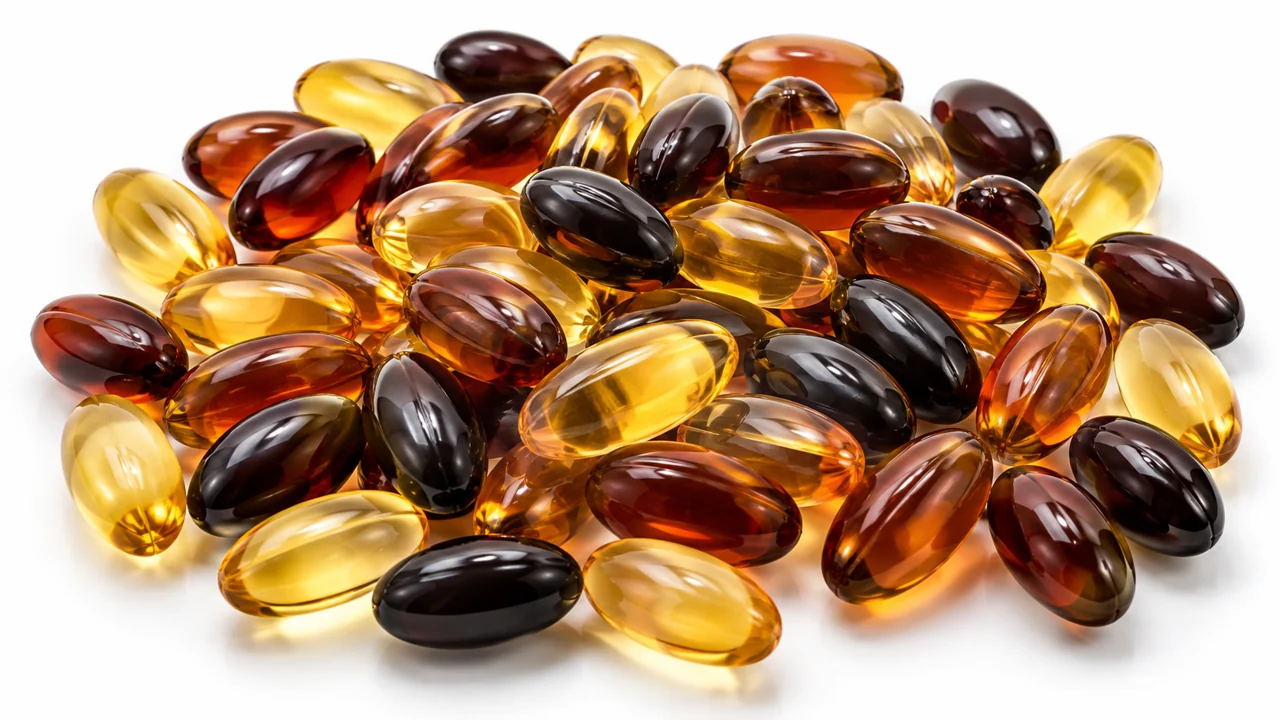
Creatine can be proposed for a softgel, but feasibility should not be assumed from the ingredient name alone. Conventional creatine materials are powders, while softgels are commonly used for liquids, solutions, suspensions, or semi-solid fills. A creatine softgel therefore raises linked questions about raw-material form, target amount, fill mass, suspension behavior, moisture, shell compatibility, capsule size, and serving count.
The practical conclusion may be that a softgel is workable under a verified design, that it requires an unattractive number or size of units, or that a powder or hard capsule is the better format. This article evaluates those choices without claiming that a softgel changes creatine absorption or performance.
Start with the Exact Creatine Material
“Creatine” is not a complete development specification. The assessment should identify the chemical form, assay basis, particle-size distribution, bulk and tapped density, moisture specification, crystal or coating characteristics, excipients already present, and supplier storage conditions. Lot-specific documentation should be reviewed alongside the current raw-material specification.
These details affect how much material is required to deliver the reviewed target, how much volume it occupies, whether it can be wetted by a proposed carrier, and how rapidly it may settle. A micronized powder may disperse differently from a coarser material, but smaller particles are not automatically a complete solution: increased surface area can affect viscosity, agglomeration, or chemical behavior. Any coated or encapsulated creatine material also needs its own mass and compatibility calculation.
Define the Reviewed Amount per Serving
Feasibility begins with a target amount that has already received appropriate scientific, regulatory, and safety review for the intended product and market. This article does not select an individual intake or recommend a personal dosage.
Convert the reviewed active amount into raw-material mass using the material’s specification and assay basis. Then include the carrier and all other fill components. That total mass, together with measured or representative density, determines the approximate fill volume. Dividing the serving among multiple softgels may reduce unit size, but it increases the number of units that must be stated consistently on the label and package.
A concept should not be called “one softgel” until the full mass balance supports it. High powder loading can produce a large fill mass even before enough carrier is added to wet and process the material.
Why Creatine Is Difficult to Place in a Conventional Softgel Fill
Limited Fit with Oil-Based Systems
Many creatine materials do not form a practical solution in common oil-based carriers. If the material does not dissolve, the softgel must usually be considered as a suspension or another specialized presentation. The development team should measure behavior in the specific carrier instead of relying on broad statements about water or oil solubility.
High Solid Load and Capsule Volume
A reviewed serving may require a substantial powder mass. A suspension also needs enough carrier to wet the particles and provide processable flow. The combined mass can lead to a large capsule or several capsules per serving. This is often the decisive commercial-format limitation even when a small laboratory sample can be prepared.
Settling and Dose Distribution
Suspended creatine can settle during mixing, holding, transfer, and encapsulation. The risk depends on particle size, density difference, carrier viscosity, temperature, shear history, vessel geometry, hold time, and circulation. A fill that looks uniform immediately after mixing may not remain uniform through a complete run.
The relevant question is not merely whether settling occurs, but whether the process keeps the material sufficiently distributed to meet predefined fill and analytical criteria. Sampling only a finished blend can miss changes between the beginning and end of filling.
Moisture and Chemical Stability
Moisture exposure is a question to investigate for the proposed combination; a finished-product conclusion requires formula-specific evidence. Creatine can undergo conversion to creatinine under some conditions, with water activity, pH, temperature, and time among the relevant variables. A softgel shell contains water during manufacture and drying, and moisture can move among the environment, shell, and fill.
Using a nominally non-aqueous carrier does not by itself prove that the finished system controls this risk. Residual moisture in ingredients, shell-to-fill migration, processing conditions, and the final package all need consideration. Assay and appropriate degradant testing should be selected and interpreted by qualified reviewers for the actual product.
Fill-Shell Compatibility
The creatine suspension, carrier, and shell should be evaluated together. Fill components may change shell hardness, flexibility, seal quality, or appearance. The shell may also contribute mobile components to the fill. Compatibility cannot be inferred from an empty shell or from a different suspension.
Possible Technical Routes and Their Trade-Offs
| Concept | Potential rationale | Questions that must be verified |
|---|---|---|
| Non-aqueous suspension | Disperse creatine particles in an oil or other acceptable low-water carrier rather than dissolving them. | Wetting, achievable solid load, viscosity, settling, redispersibility, fill uniformity, moisture migration, and shell compatibility. |
| Structured or semi-solid fill | Use a higher-viscosity or temperature-dependent matrix to slow particle movement. | Flow at filling temperature, heat exposure, hold-time behavior, solidification, unit consistency, and storage changes. |
| Coated or microencapsulated material | Modify particle behavior or separate the creatine from part of the fill environment. | Added carrier mass, reduced active loading, coating integrity, analytical method, regulatory status, and behavior during processing and storage. |
| Dry or multiparticulate concept | Avoid a conventional liquid suspension through a specialized internal presentation. | Availability of a validated process, capsule size, mechanical integrity, unit uniformity, and whether complexity is justified versus a hard capsule. |
These are evaluation paths, not default capabilities or guaranteed solutions. Each route may add mass, complexity, analytical needs, or packaging constraints. A concept should advance only when the specific process and materials can be demonstrated with representative samples.
What a Bench Feasibility Study Should Measure
A meaningful study uses the proposed creatine lot or a justified representative, the actual carrier system, and controlled preparation conditions. Record order of addition, mixing speed and time, temperature, particle treatment, deaeration if used, and hold conditions.
- Wetting and agglomeration: determine whether dry pockets or persistent clusters remain.
- Solid loading: establish whether the reviewed target can be incorporated without an impractical carrier volume.
- Viscosity and flow: measure at relevant temperatures and after relevant shear or hold periods.
- Settling behavior: observe or measure separation over the planned mixing, transfer, and filling window.
- Sampling consistency: compare samples from different positions or times using a justified analytical approach.
- Early chemical indicators: check the attributes selected through risk assessment, without treating a short study as shelf-life proof.
If the required solid load cannot be wetted and processed at a reasonable fill mass, the softgel concept may be unsuitable even before encapsulation.
What Representative Softgel Samples Need to Answer
After the fill passes bench screening, encapsulated samples should represent the proposed fill, shell, capsule size, and process as closely as practical. The evaluation plan may include:
- fill weight and variation under the intended filling conditions;
- distribution of creatine in samples collected across the run;
- assay and relevant conversion or degradation markers;
- seam quality, leakage, deformation, sticking, and shell condition;
- fill separation, caking, crystallization, or inability to redisperse;
- disintegration or other applicable performance tests;
- behavior in the proposed package under justified storage conditions.
Appearance alone is not sufficient. A smooth, opaque softgel can conceal settled solids or variable distribution. Likewise, a short successful run does not establish commercial-scale uniformity, and accelerated or short-term observations do not automatically establish a labeled shelf life.
Assess Scale-Up Before Approving the Format
Suspension behavior often changes with vessel size, mixing pattern, transfer line, temperature control, and hold time. A scale-representative assessment should compare the beginning, middle, and end of the filling period and define how the fill remains mixed. It should also examine whether viscosity increases, particles settle in lines or hoppers, or fill-weight control shifts as the run proceeds.
The accepted operating range should be linked to the exact material and formula version. Changing creatine particle size, supplier, assay, carrier, or suspending system can invalidate previous assumptions and may require renewed feasibility work.
Packaging Is Part of the Moisture-Control Strategy
The proposed bottle, closure, seal, desiccant arrangement, or blister should be evaluated with the finished softgel. Packaging barrier data can guide selection, but supplier values alone do not prove how the creatine, fill, and shell will behave together. Package count and headspace also matter because they influence the exposure pattern during storage and use.
Storage language and label instructions should reflect reviewed evidence and destination-market requirements. Avoid translating a general concern about moisture into an unsupported guarantee such as “moisture-proof” or “stable for two years.”
Compare Softgels with More Direct Formats
| Format | Practical comparison point |
|---|---|
| Powder | Can accommodate a relatively high material mass per serving, but requires scooping or unit packs and may need dispersion or flavor considerations. |
| Hard capsule | Handles dry powder directly, but capsule volume may still require multiple units for a high-mass serving. |
| Tablet | May reduce carrier volume, but compression behavior, tablet size, disintegration, and excipient needs require evaluation. |
| Softgel | Masks direct contact with powder and offers a sealed unit, but may require a suspension, added carrier mass, moisture control, and multiple large units. |
Convenience and taste masking are presentation considerations, not proof of better absorption or efficacy. Compare formats using the same reviewed active target, realistic unit count, package size, testing plan, and label requirements.
Decision Criteria: When Is a Creatine Softgel Reasonable?
A softgel concept may warrant further development when the exact material can be incorporated at a practical solid load; the fill can remain sufficiently distributed through the process; the shell and fill are compatible; the unit size and serving count are acceptable; and representative analytical, physical, storage, and packaging evaluations support the proposed design.
A softgel may be the wrong choice when the reviewed target creates excessive fill mass, the suspension settles too quickly, moisture or compatibility risks cannot be adequately controlled, scale-representative uniformity is not demonstrated, or the complexity offers no useful advantage over a powder or dry capsule. Rejecting the format in those circumstances is a valid development outcome.
Conclusion
Creatine softgels are a feasibility problem, not a simple yes-or-no catalogue selection. The decision depends on the specified creatine material, reviewed amount per serving, achievable solid loading, fill rheology, suspension control, moisture management, shell compatibility, unit size, process evidence, and package. A carefully tested concept might advance, but a powder, hard capsule, or another format may be more practical. No format decision should be used to imply improved absorption, superior performance, or guaranteed stability.
Related development decisions
Evidence to request for the actual creatine softgel
| Record | What to connect |
|---|---|
| Material and fill | Exact creatine material, loading basis, carrier and sample references. |
| Unit calculation | Fill mass, assessed unit size and count per reviewed serving. |
| Encapsulated sample | Relevant uniformity, handling and fill–shell observations under stated conditions. |
| Decision | Unresolved feasibility points and the evidence required for the next stage. |
Continue the specific development decision
Related Reading
Browse the product references below, or send your own formula brief. Confirm the composition, packaging and sample requirements for the project you want to quote.

Contact


