

Planning a Custom Softgel Formula: A Practical Development Framework
Use this framework to plan the development work and its records.
The literature supports reviewing shell design and fill interactions, but no single recipe, compatibility limit or capsule size is assumed for your formula.
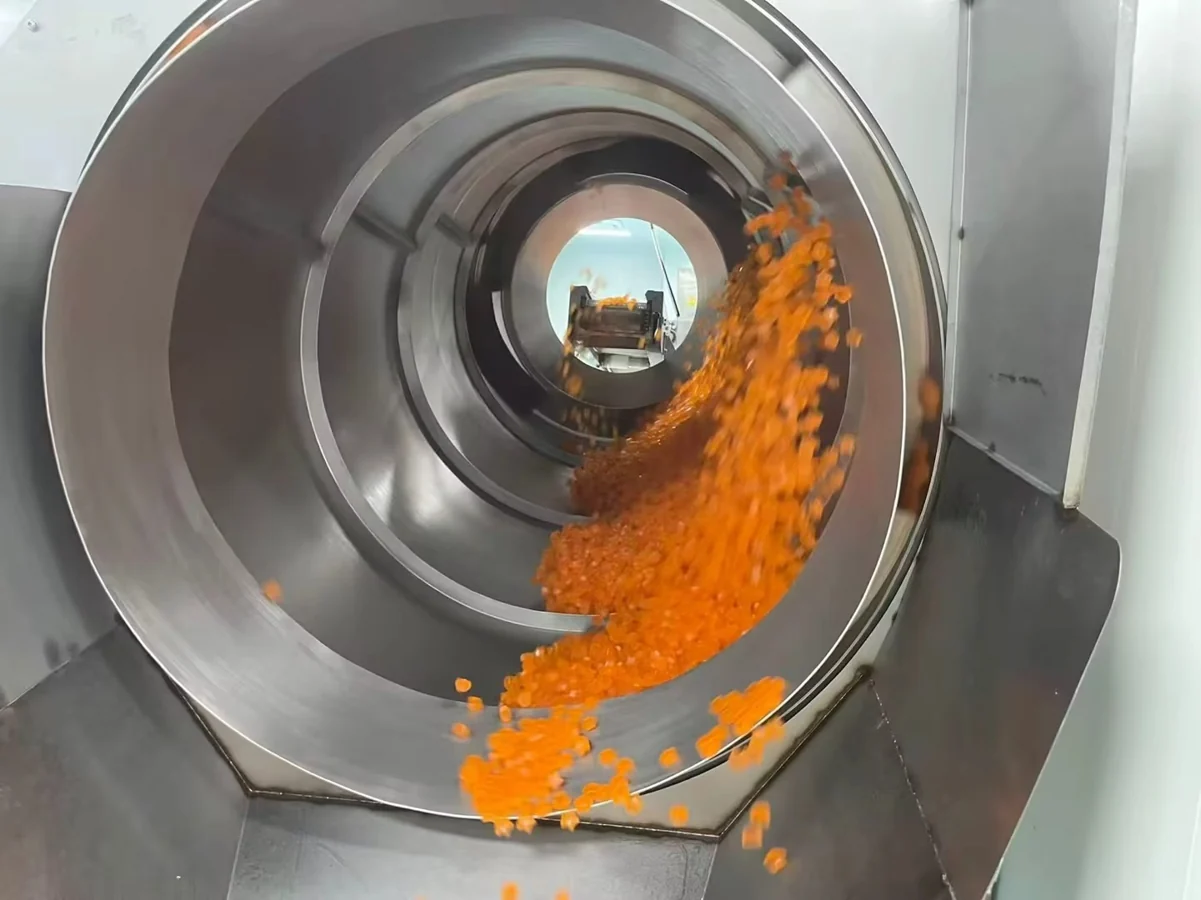
A softgel is not simply a liquid formula placed inside a capsule. The fill, shell, manufacturing conditions, package, and intended serving must work as one system. A promising ingredient list can still fail if the fill separates, interacts with the shell, requires an impractical capsule size, or changes during storage.
This framework explains the technical questions a brand should resolve from the first brief through representative samples and packaging evaluation. It is a product-development guide, not a claim that any ingredient or formula is automatically suitable for a softgel.
1. Define the Product Brief Before Selecting the Shell
Begin with a controlled brief rather than a list of marketing ideas. Record the proposed active ingredients, their chemical or physical forms, target amounts per serving, intended number of softgels per serving, target market, dietary-positioning constraints, and proposed label statements. Identify which amounts have already received appropriate scientific, regulatory, and safety review and which remain provisional.
The serving target matters immediately. A low-load oil-soluble ingredient may fit comfortably in one unit, while a high mass of suspended powder may require several large units. Capsule size, swallowability, fill density, and serving count therefore need to be discussed together. Do not use capsule size to infer a suitable intake, and do not reduce a reviewed amount merely to fit a preferred unit without renewed review.
2. Characterize Every Ingredient, Not Just the Active Name
Two materials with the same common name may behave differently because of particle size, assay, crystal form, carrier system, moisture, or supplier process. The development team needs material-specific information rather than assumptions based on an ingredient category.
- Identity and strength: specification, assay basis, and the calculation used to convert the reviewed active target into raw-material weight.
- Physical form: liquid, semi-solid, crystalline powder, amorphous powder, beadlet, or coated material.
- Particle properties: size distribution, shape, density, tendency to agglomerate, and abrasiveness where relevant.
- Environmental sensitivity: response to moisture, oxygen, heat, and light.
- Compatibility clues: pH-related behavior, ionic content, volatile components, reactive functional groups, and any known interaction with carriers or shell materials.
- Documentation: current specification, lot-specific test results, allergen or dietary-status information, and traceability records needed for the target market.
These inputs help identify what must be tested. Supplier data and literature can support a hypothesis, but they do not prove the behavior of the complete finished softgel.
3. Decide Whether the Fill Is a Solution, Suspension, or Semi-Solid
Softgel fills are commonly developed as solutions, suspensions, or semi-solid systems. The correct route depends on solubility, target load, chemical stability, processing temperature, and the allowable fill mass.
| Fill approach | Useful when | Questions to evaluate |
|---|---|---|
| Solution | The required material dissolves at the intended concentration in an acceptable carrier system. | Solubility margin, precipitation after cooling, solvent migration, chemical stability, and fill-shell compatibility. |
| Suspension | The material does not dissolve but can be distributed as controlled particles in the carrier. | Particle size, wetting, viscosity, sedimentation, redispersibility, dose uniformity, and pumpability. |
| Semi-solid | A higher-viscosity matrix may help manage physical stability or a temperature-dependent process. | Melting range, temperature history, flow during filling, solidification behavior, and storage changes. |
A clear fill is not automatically more stable, and a visually uniform suspension is not automatically dose-uniform. Each approach requires predefined physical and analytical checks.
Carrier and Excipient Selection
Carriers, suspending agents, antioxidants, wetting agents, and other excipients should have a defined technical purpose. Selection should consider regulatory acceptability in the destination market, compatibility with the active materials, effect on viscosity and density, and influence on the shell. An excipient should not be added solely because it appears in another product; the complete system must be evaluated.
4. Design Fill Rheology and Particle Control
For suspensions, the development objective is not simply to make the fill thicker. The fill must remain sufficiently uniform during holding and filling while still flowing through the intended equipment. Excessive viscosity can impair transfer or weight control; insufficient structure can allow rapid settling. Temperature and shear history may change this balance.
Record the preparation sequence, mixing conditions, temperature range, hold time, and sampling method used for development lots. Evaluate whether particles settle, float, agglomerate, or grow during holding. Samples from different points in the vessel or filling run may be needed to assess distribution. Where particle reduction is proposed, assess whether it changes stability, surface reactivity, or processing behavior rather than assuming smaller is always better.
5. Treat Fill and Shell as a Coupled System
The shell is exposed to the fill throughout storage. Water and other mobile components can migrate between the fill, shell, and environment. This may change shell hardness, elasticity, seal condition, disintegration behavior, or fill composition. The shell system also has its own moisture and mechanical requirements.
Discuss gelatin or an appropriate alternative only after reviewing product positioning and technical compatibility. Shell formulation variables may include the film-forming material, plasticizer system, water, color, and opacifier. The selected color and opacity should be assessed for target-market acceptability and light-protection needs; appearance alone does not establish protection.
- Check the fill for components that may soften, embrittle, stain, or otherwise affect the shell.
- Review the shell for components that may migrate into or interact with the fill.
- Evaluate seams, leakage, deformation, sticking, and surface changes under relevant conditions.
- Do not extrapolate compatibility from an empty shell or from a different fill composition.
6. Calculate Fill Mass, Capsule Size, and Serving Count Together
Convert the reviewed amount per serving into a complete mass balance. Include active raw materials at their specified assay, carriers, processing aids, overage only when justified and reviewed, and any other fill components. Estimate fill density using representative material where possible. The calculation should show the proposed fill mass per unit and the number of units that provide the complete serving.
Then evaluate capsule geometry and consumer handling. A technically fillable capsule may still be undesirable if it is too large or if the serving requires too many units. Conversely, forcing the formula into one small unit can create an unstable suspension or an unrealistic loading target. Document the trade-off instead of hiding it in a nominal capsule size.
7. Prepare Bench Samples to Answer Specific Questions
A bench sample should test defined hypotheses: whether the ingredients can be incorporated, whether the fill remains sufficiently homogeneous during the planned hold, whether the proposed viscosity is workable, and whether early fill-shell interactions appear. Record raw-material lots, quantities, order of addition, temperatures, mixing conditions, and observations.
Bench work is a screening stage. It does not establish commercial-scale performance, finished-product stability, or shelf life. If the fill is evaluated without a representative shell, the result cannot answer shell-compatibility questions.
8. Evaluate Representative Encapsulated Samples
Once the concept is technically plausible, evaluate softgels that represent the proposed fill and shell together. Agree acceptance criteria before interpreting the samples. Depending on the formula and market, the development plan may include:
- appearance, dimensions, seam condition, leakage, and deformation;
- fill weight and relevant unit-to-unit or composite analytical checks;
- assay and other composition-specific tests selected through risk assessment;
- physical behavior of the fill, including settling, separation, precipitation, or crystallization;
- shell moisture or mechanical observations where relevant;
- disintegration or other applicable performance testing;
- microbiological and contaminant testing as appropriate to the materials and market;
- observations under proposed storage and packaging conditions.
Retain a documented reference and compare each revision against it. A sample that looks acceptable on one day is not evidence of stability. Short-term or stressed observations are development signals, not automatic proof of a labeled shelf life.
9. Use a Pilot or Scale-Representative Run to Reduce Scale-Up Risk
Scale changes mixing energy, heat transfer, hold time, transfer distance, and the opportunity for a suspension to settle. A scale-representative run should test the parameters most likely to affect the formula, rather than serving as a ceremonial approval step.
Review fill preparation and hold conditions, transfer behavior, fill-weight control, distribution of suspended material, sealing, drying, sorting, and any change between early and late run samples. Record deviations and the rationale for adjustments. Acceptance of a pilot lot supports a defined configuration; it does not prove that every future formulation or process will behave the same way.
10. Evaluate Packaging as Part of the Formula System
Softgels can respond to moisture, oxygen, light, temperature, and contact with packaging materials. Compare proposed bottles, closures, induction seals, desiccant arrangements, or blister structures against the formula’s identified risks. Package count should match the serving count and intended use period, and label directions must remain consistent with the approved specification.
Packaging evaluation should use the actual or technically representative softgel. A barrier claim based only on packaging supplier data does not establish finished-product shelf life. Storage statements, in-use handling, and any warning language should be reviewed for the destination market.
11. Lock the Formula Through Controlled Specifications
The final handover should connect the accepted ingredient specifications, master formula, fill and shell composition, process ranges, in-process controls, finished-product tests, package configuration, label version, and stability plan. Changes in supplier, assay, particle size, carrier, shell system, capsule size, or package may reopen questions previously considered resolved.
A useful decision record distinguishes confirmed results from open items. It should state what was tested, which version was tested, what the result supports, and what still requires verification. This prevents an early prototype from being treated as a production-ready or shelf-life-proven formula.
Softgel Development Decision Checklist
- Has the complete serving target received the required professional review?
- Are raw-material forms and specifications defined rather than named generically?
- Is the fill approach justified as a solution, suspension, or semi-solid?
- Are viscosity, density, particle behavior, hold time, and temperature controlled?
- Have the fill and shell been evaluated together?
- Does the proposed unit size and count deliver the complete reviewed serving?
- Are representative sample and scale-up questions documented with acceptance criteria?
- Has the proposed package been evaluated with the finished softgel?
- Do the specification, label, serving information, warnings, and package count agree?
Conclusion
A robust custom softgel project progresses by evidence: define the serving, characterize the materials, select and test the fill system, evaluate fill-shell compatibility, confirm a practical unit configuration, and then examine scale and packaging risks. The best outcome may be a workable softgel, a revised softgel concept, or a documented decision to use another format. Keeping those options open is more reliable than assuming at the outset that every formula belongs in a softgel.
Related development decisions
Separate the development records
| Record | What to connect |
|---|---|
| Bench formulation | Composition, material identities, preparation and open physical questions. |
| Encapsulated sample | Fill and shell revisions, sample codes and applicable observations. |
| Representative process work | Which production conditions were represented and which were not. |
| Handover | Authorised specification, methods, remaining work and change responsibility. |
Continue the specific development decision
Related Reading
Browse the product references below, or send your own formula brief. Confirm the composition, packaging and sample requirements for the project you want to quote.

Contact


